Monday, June 13, 2011

US Buildings and Trends in Construction

Source: fidelitylocksmith.com

I had a real hard time in guesstimating the quantum of buildings in US, not to mention the segmentation of commercial and residential.

After going through a variety of literatures, online resources, government data and portals, I somehow managed to attain some level of quantum. Below is the analysis and various data-points which I was able to achieve based on the sturdy research and analytics.
Commercial Buildings of US:

This section will provide you with the trends in commercial buildings by various building attributes. The trends will include distribution of buildings by square footage, occupancy, number of stories, year of built, type of roof and exterior walls.

Apart from these basic stats there are certain trends for type of roof and exterior wall construction.

  • Distribution of Buildings by SquareFootage / Area Building


  •  Distribution of Buildings by Occupancy Type


  •  Distribution of Buildings by Number of Stories / Floors


 Distribution of Buildings by Year of Built / Construction

  •  Distribution of Buildings by Roof Type


  •  Trends in Roof Type by Square Footage of buildings


  •  Trends in Roof Type by Number of Stories / Floors


  •  Trends in Roof Type by Year of Built / Construction


  •  Distribution of Buildings by Exterior Wall


  •   Trends in Exterior Walls by Square Footage


  •    Trends in Exterior Walls by Number of Stories / Floors


  •    Trends in Exterior Walls by Year of Built / construction

Residential Buildings of US:

This section will provide you with trends in residential buildings by various building attributes. The residential buildings comprise of SFD-Attached, SFD-Detached, MFD and Mobile Homes.
  • SFD denotes Single Family Dwelling
  • MFD denotes Multi Family Dwelling

The trends will include distribution of residential buildings by year of built, number of stories, construction type and roof type.
  • Distribution of Buildings by Type of Structure / SFD


  •  Distribution of Buildings by Year of Built / Construction


  •  Distribution of Buildings by Number of Stories / Floors


  •  Distribution of Buildings by Type of Construction


  •  Distribution of Buildings by Type of Roof

References:
US Environment Protection Agency
US Office of Energy Consumption and Efficiency Statistics
US Census Information
The International Conference of Building Officials
The Southern Building Code Congress International
The Building Officials and Code Administrators International


Monday, April 4, 2011

Mutual Funds – The strategy for beginners…


Source: www.linkingsky.com
In case you are new to the investment space and would like to have handsome returns on your savings then you need to strategize your investments. We all know that keeping the money in savings account or in fixed deposits yields a very low return which might be a counter for inflation. But in case if you want to have some extra income apart from your regular source of income, you should start investing though smartly.

I am sharing with you my thought process and my strategy which has worked well for me, my acquaintances and many more. Try to follow the below mentioned steps and do let me know the output:

  • Start with smaller amount which you can afford to save for a minimum span of 1.5-2 years

The basic rule of investing is one must have some sort of risk appetite and should start with investment of “EXTRA/SURPLUS” money which you don’t require in near/short future.
  • Start with SIPs (Systematic Investment Plans)

In order to play safe the basic rule of thumb is to start with monthly SIPs. As SIPs work on law of averages, hence chances of making losses will be low.
  • Invest in pure MF’s only

By pure MF’s what I mean is, don’t get fooled up by ULIPS or other schemes which offer multiple benefits. Always follow the KISS therapy which suggests Keep it short and simple. When you require medical insurance buy pure medical insurance, when you need life insurance buy pure life insurance and when you need MFs go for pure MF’s.
The reason behind this is when you opt for multiple benefits in a scheme you end paying for useless deduction and charges viz; mortality charge etc. The real money which is utilized for investment becomes less than what you actually pay.

  • Diversify the investment

Always opt for multiple and varied kind of schemes. The varied kind doesn’t mean different AMCs like ICICI or HDFC or SBI etc. By varied kind I mean different structures of schemes like Small-cap, Mid-cap, Pharma, Index schemes etc.

  • Invest for a good time frame

The minimum time frame should be 2 years to get a reasonable return, though this may vary a lot. In case a depression comes-in during your 2nd year itself then you need to sustain the scheme for some more time.
As the SIP’s work on law of averages so do keep in mind to sustain or carry forward the scheme during depressions and low levels of equity market. The depression is right time for investors as this is the time when you purchase units at cheapest price.

  • Your right pick of schemes

In case you don’t have any idea about various indexes or sector performances then the right strategy for you is mentioned as hereunder:
a.       Depending on the amount which you can save try to divide that fund into 2-3 proportions.
b.      Try to locate best performers across various AMCs for Equity diversified funds. Another way of looking at it would be to locate best performers in Large Cap, Mid Cap and Small Cap.
c.       Invest in equal proportions in varied cap funds.
The logic behind investing in varied caps is that it will help you in reducing your risk. You can gain benefit of multiple types of equities using such MF’s.

Beware of sectoral funds or index funds. While searching for top performing funds always try to locate 5 stare or 4 star rated firms with high asset allocation. Some of the reference website can be:
The new buzz word in the market - STP (Systematic Transfer plan)

In case you have surplus money in your bank account which you want to transfer in MFs through SIPs you can opt for STP. Now comes a question what is the difference between STP and SIP. The below figure will explain you the same in very simple manner.

STP is just a Debt Mutual fund which is safest and yields better returns than your normal savings account. Rest all transactions are the same. In STP one gains the advantage of better returns on the lump-sum amount which would have otherwise not yielded returns or have yielded returns at bank rate.

Wednesday, March 9, 2011

Mutual Fund - Exploring the concept and suitable investment strategy?


This post presents insights on the fundamentals of Mutual fund like functioning of Mutual Fund, its various types, reasons for investing in mutual funds and broad level strategy for investment. This is a sort of beginners guide to understand mutual funds.

The post focusing on strategies of investment in mutual funds will be published sooner… keep tuned to this space and be a follower to receive regular updates.


What is Mutual Fund?

A mutual fund is not a substitute investment choice to stocks and bonds, rather it’s a consortium which amalgamates money of several investors and invests in stocks, bonds, money market instruments and other types of securities.

Buying a mutual fund is like buying a small slice of a big pizza. The owner of a mutual fund unit gets a proportional share of the fund’s gains, losses, income and expenses.

                                    *Instead of Equity there can be other instruments as well.

The company that puts together a mutual fund is called an AMC. An AMC may have several mutual fund schemes with similar or varied investment objectives.

The AMC hires a professional money manager, who buys and sells securities in line with the fund's stated objective.

Types of MF
  • BY STRUCTURE:

  • BY INVESTMENT OBJECTIVE
  • OTHERS
Why MF?
  • Professional Money Management
Fund managers are responsible for implementing a consistent investment strategy that reflects the goals of the fund. Fund managers monitor market and economic trends and analyze securities in order to make informed investment decisions.
  • Diversification
Diversification is one of the best ways to reduce risk. Mutual funds offer investors an opportunity to diversify across assets depending on their investment needs.
  • Liquidity
Investors can sell their mutual fund units on any business day and receive the current market value on their investments within a short time period (normally three- to five-days).
  • Affordability
The minimum initial investment for a mutual fund is fairly low for most funds (as low as Rs500 for some schemes).
  • Convenience
Most private sector funds provide you the convenience of periodic purchase plans, automatic withdrawal plans and the automatic reinvestment of interest and dividends.
Mutual funds also provide you with detailed reports and statements that make record-keeping simple. You can easily monitor the performance of your mutual funds simply by reviewing the business pages of most newspapers or by using our Mutual Funds section.
  • Flexibility and variety
You can pick from conservative, blue-chip stock funds, sectoral funds, funds that aim to provide income with modest growth or those that take big risks in the search for returns. You can even buy balanced funds, or those that combine stocks and bonds in the same fund.
  • Tax benefits on Investment in Mutual Funds
How to invest
  • Identify investment needs
Your financial goals will vary, based on your age, lifestyle, financial independence, family commitments, level of income and expenses among many other factors. Therefore, the first step is to assess your needs. Begin by asking yourself these questions:
    • What are my investment objectives and needs?
Probable Answers: I need regular income or need to buy a home or finance a wedding or educate my children or a combination of all these needs.
    • How much risk am I willing to take?
Probable Answers: I can only take a minimum amount of risk or I am willing to accept the fact that my investment value may fluctuate or that there may be a short term loss in order to achieve a long term potential gain
    •  What are my cash flow requirements?
Probable Answers: I need a regular cash flow or I need a lump sum amount to meet a specific need after a certain period or I don’t require a current cash flow but I want to build my assets for the future.
By going through such an exercise, you will know what you want out of your investment and can set the foundation for a sound Mutual Fund Investment strategy
  • Choose the right Mutual Fund
Once you have a clear strategy in mind, you now have to choose which Mutual Fund and scheme you want to invest in. The offer document of the scheme tells you its objectives and provides supplementary details like the track record of other schemes managed by the same Fund Manager. Some factors to evaluate before choosing a particular Mutual Fund are:
o   Track record of performance over the last few years in relation to the appropriate yardstick and similar funds in the same category
o   How well the Mutual Fund is organized to provide efficient, prompt and personalized service
o   Degree of transparency as reflected in frequency and quality of their communications
  • Select the ideal mix of Schemes
Investing in just one Mutual Fund scheme may not meet all your investment needs. You may consider investing in a combination of schemes to achieve your specific goals. The following charts could prove useful in selecting a combination of schemes that satisfy your needs.
    • Conservative Approach
Beneficial for retired and other investors who need to preserve capital and earn regular income
    • Aggressive
Beneficial for:
  • Investors in their prime earning years and willing to take more risk
  • Investors seeking growth over a long term
    • Moderate
Beneficial for:
·         Investors seeking income and moderate growth
·         Investors looking for growth and stability with moderate risk
  • Invest regularly

For most of us, the approach that works best is to invest a fixed amount at specific intervals, say every month. By investing a fixed sum each month, you get fewer units when the price is high and more units when the price is low, thus bringing down your average cost per unit. This is called rupee cost averaging and is a disciplined investment strategy followed by investors all over the world. With many open-ended schemes offering systematic investment plans, this regular investing habit is made easy for you.
  • Keep taxes in mind

As per the current tax laws, Dividend/Income Distribution made by mutual funds is exempt from Income Tax in the hands of investor. However, in case of debt schemes Dividend/ Income Distribution is subject to Dividend Distribution Tax. Further, there are other benefits available for investment in Mutual Funds under the provisions of the prevailing tax laws. You may therefore consult your tax advisor or Chartered Accountant for specific advice to achieve maximum tax efficiency by investing in mutual funds.
  • Start early

It is desirable to start investing early and stick to a regular investment plan. If you start now, you will make more than if you wait and invest later. The power of compounding lets you earn income on income and your money multiplies at a compounded rate of return.

Inspiration: 

Monday, February 21, 2011

CAR..... A Dream.... A Passion.... A Necessity....


Being grown up as a car fanatical, I really find it refreshing when it comes to reading, discussing and driving cars.

In India it’s the passion/dream for every class of people to have their dream car. The dream can vary from Maruti Alto/Tata Nano  of middle class to BMWs, Rolls Royce of rich class. But the common linkage of all classes is obsession about cars.

As the rising economy of India changing the cars from luxury to necessities, I have observed family members, office colleagues, friends and almost everybody to talk about cars. The decision to buy a car is not a simple one, people look for various perspectives and opinions. Some consider looks, while others look on engine displacement (CC) and there are some who want the economical package.

After having constructive discussions (almost fight) with my brother, colleagues and friends, I finally decided to make things simpler for everybody and come out with something which can somewhat help in deciding (criticizing) various car options available in Indian market.


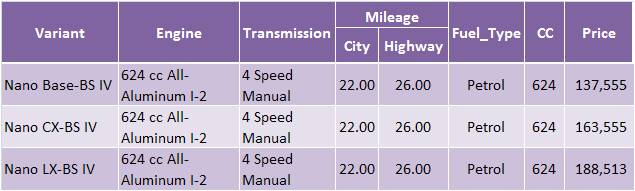
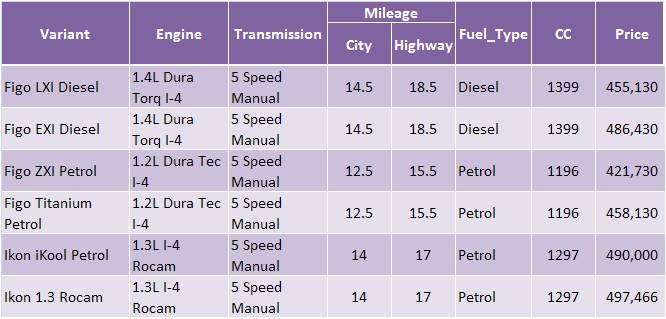
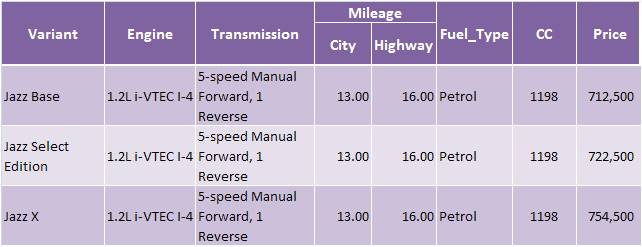
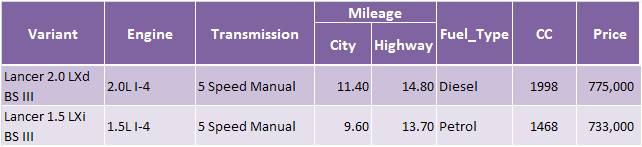
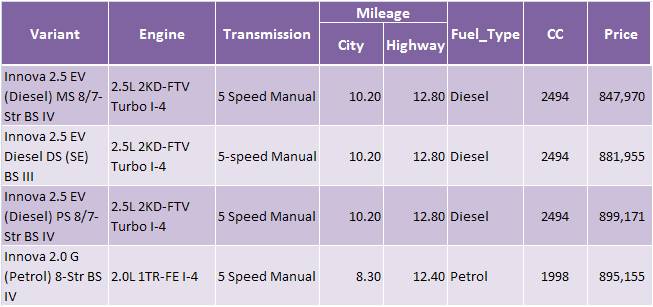
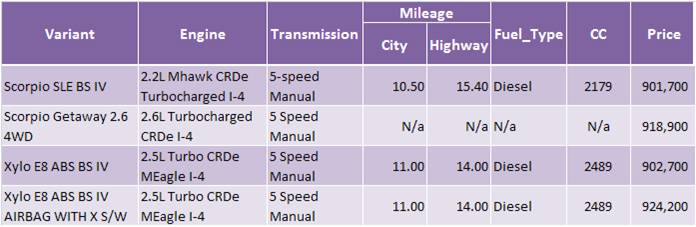
The below tables will surely help in knowing various options available based on required price bands. The typical problem I face while shopping is remembering very few brand names and alternatives available for my usage. Mostly it’s the popular ones which we remember because of better marketing and old presence.


At times we are not aware of all the options in our required price range. With all the globalization happening there are likely chances that we may get our “DREAM CAR” in our budget.


Though the ideal process of buying a car should be somewhat like:

For fuel options, ideally if you drive not more than 1000km in a month, don’t get attracted by fuel options other than petrol. The best fuel for this mileage is petrol only. In case you are diving more than 1000km, you can go for other fuel options.


The various options/models available under different price ranges are provided below. This will surely be of some help in shortlisting various options. 


(Note: All prices mentioned below are Ex-Showroom prices in Delhi. The actual price will vary from state to state and additional taxes also apply)
Price Range I: Below 2 Lakh Rupees
TATA

Price Range II: Rupees 2 Lakh - 3 Lakh
TATA
HYUNDAI

    MARUTI
Price Range III: Rupees 3 Lakh - 4 Lakh
MAINI
FORD
FIAT
CHEVROLET

TATA
HYUNDAI
MARUTI
Price Range IV: Rupees 4 Lakh - 5 Lakh
ICML
TOYOTA
MAINI
VOLKSWAGEN
SKODA
NISSAN
CHEVROLET
FIAT
FORD 
MAHINDRA

TATA
MARUTI
HYUNDAI
Price Range V: Rupees 5 Lakh - 6 Lakh
SAN
SKODA
TOYOTA
VOLKSWAGEN
CHEVROLET
FORD
NISSAN
PREMIER
MARUTI
FIAT
HYUNDAI
ICML
MAHINDRA
Price Range VI: Rupees 6 Lakh - 7 Lakh
CHEVROLET
MARUTI
NISSAN
PREMIER
SKODA 
VOLKSWAGEN
TOYOTA
MAHINDRA
FIAT
FORD
HYUNDAI
TATA
ICML
Price Range VII: Rupees 7 Lakh - 8 Lakh
VOLKSWAGEN
CHEVROLET
FIAT
FORD
HONDA
ICML
MAHINDRA
MARUTI
MITSUBISHI
HYUNDAI
TATA
Price Range VIII: Rupees 8 Lakh - 9 Lakh
VOLKSWAGEN
FORD
MARUTI
TOYOTA
CHEVROLET
HONDA
HYUNDAI
MAHINDRA
TATA
FIAT
Price Range IX: Rupees 9 Lakh - 10 Lakh
TATA
TOYOTA
VOLKSWAGEN
CHEVROLET
HONDA
HYUNDAI
MAHINDRA
MITSUBISHI
Price Range X: Rupees 10 Lakh - 12 Lakh
TOYOTA
CHEVROLET
HONDA
TATA
SKODA
MAHINDRA
Price Range XI: Rupees 12 Lakh - 15 Lakh
VOLKSWAGEN
CHEVROLET
HYUNDAI
MAHINDRA
TATA
HONDA
SKODA
Price Range XII: Rupees 15 Lakh - 25 Lakh
VOLKSWAGEN
BMW
CHEVROLET
FORD
NISSAN
TATA
MARUTI
TOYOTA
MITSUBISHI
HYUNDAI
SKODA
HONDA
Price Range XIII: Rupees 25 Lakh - 50 Lakh
TOYOTA
VOLVO
HONDA
JAGUAR
LAND ROVER
MITSUBISHI
NISSAN
PORSCHE
SKODA
MERCEDES-BENZ
AUDI
BMW
Price Range XIV: Rupees 50 Lakh OR MORE
TOYOTA

VOLKSWAGEN

VOLVO

BENTLEY

JAGUAR

LAND ROVER

NISSAN

ROLLS ROYCE
PORSCHE

AUDI

BMW

MERCEDES BENZ